
As part of the Japan Society Study tour, we had the great fortune of participating in two homestays. Our first homestay was in Obu, a small suburb just outside of Noya. When we arrived in Obu, we were greeted at the train station by representatives of the Obu International Association, who accompanied us to city hall where we met our host families after many introductions and speeches. I had the great fortune of staying with the Sakurai family for the weekend; a wonderful family who made me feel at home from the minute we met.
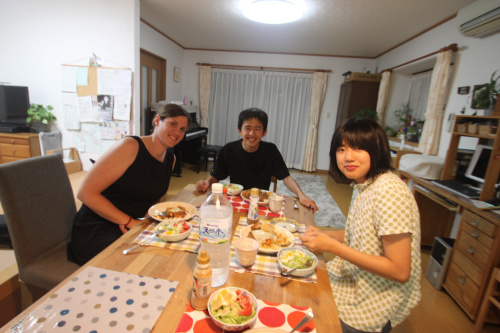
Sakurai Family
The first night, we spent talking over dinner and getting to know each other a bit. Ken, their son, also showed me a few archery moves that he was learning in school.
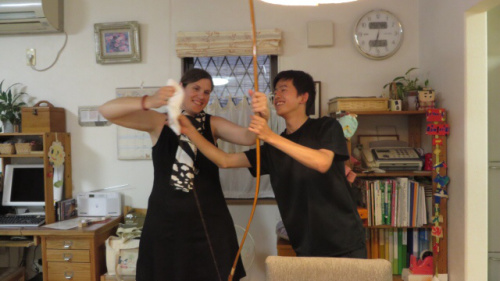
Learning Japanese Archery
1. Disipline: With seats right next to each other, and classes with 40 students in them, Japanese teachers do not have to focus on classroom management suprisingly, but are free to focus on content and instruction.
2. Respect: Not only did I witness a great amount of respect from students to teachers (whom they call Sensei), but also from student to student. When class is dismissed, the students all stand, the teacher formally dismisses them (regardless that the bell has already rung), and the students bow to him/her before they leave. Amazing!
3. Self-Initiative: Students often take the initiative to monitor classroom discipline if a student acts out. They are also in charge of serving their own lunch to each other, (Students eat with their classes and teachers in classroom), and cleaning up after lunch is over. After school, most students partake in club activities, some of which function without a teacher always supervising. For example, we witnessed the archery team practicing with no adult supervision!
3. Cleanliness: Both after lunch and after school, students, not custodians or teachers, are given 15 minutes to clean the classrooms, hallways, and bathrooms. From what I exhibited, the building was immaculate and the classrooms neat and tidy. Also, when entering the school, everyone is expected to leave your shoes behind and wear slippers which are designed for the inside, so as to keep the school clean. When entering the bathroom, one is also expected to remove their “inside slippers” for bathroom slippers.
Here are some pictures of the school:
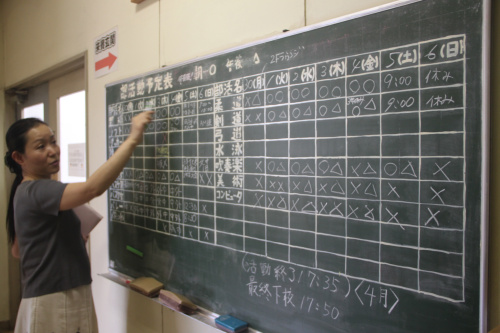
Schedule of the Day
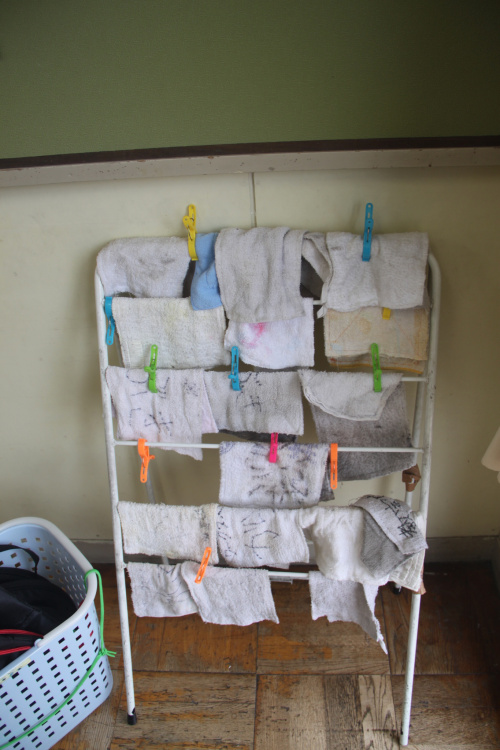
Rags for students to clean room
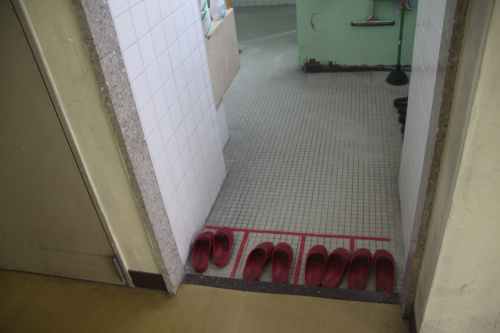
Special Bathroom Slippers
After a very long, but rewarding day of talking with students and teachers, I had a great evening at “home”, enjoying a home-cooked diner and some calligraphy lessons.
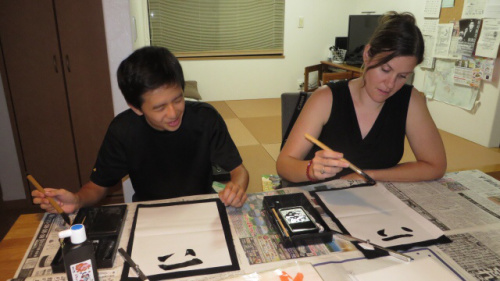
Calligraphy
I think mine turned out pretty good:)

Calligraphy: “PEACE”
The next day, I awoke early and we headed around the corner to a local shrine to watch the Sumo wrestlers practice.

Sumo Practice
After Sumo, my family took me about an hour outside of Obu, to the city of Inuyama to visit the castle there. The Inuyama castle, built in 1537 by Oda Yojirou Bouyasu, is the oldest standing castle in Japan.

Lordship of the castle changed frequently throughout the years, but it was designated a national treasure in 1935, and has withstood monsoons, earthquakes, and many wars and battles over the years.

Hideyo and Me

Shinto purifying

Ayana, me and Hideyo

Inuyama Castle
My family arranged it so I could go on an English speaking tour; very generous and thoughtful! With our guide, we climbed to the top of the castle, which offers incredible fews of the surrounding area. Of course, during the Samurai period, this would be used as a look out.

After our visit, we walked around the old town of Inuyama, and my family treated me to lunch at one of the little resturaunts lining the streets leading away from the castle. There was also time to play dress up:)

Samurai Weller

